The agricultural landscape of Telangana has seen a major transformation with the launch of the Rythu Bharosa scheme on January 26, 2025. Designed by the state government to replace the previous Rythu Bandhu program, this newly structured financial welfare initiative ensures that active cultivators receive the timely investment support they need for a successful harvest. Whether you are looking for the latest Rythu Bharosa payment status check online or want to understand the new tenant farmer eligibility rules, this guide covers everything you need to know about the Telangana Rythu Bharosa 2026 scheme.
What is the Telangana Rythu Bharosa Scheme?
The Telangana Rythu Bharosa Scheme is the state’s flagship agricultural investment support program. The primary goal is to alleviate the debt burden on the farming community by offering direct financial assistance to meet seasonal agricultural input costs, such as seeds, fertilizers, and pesticides.
Under this scheme, the government provides eligible farmers with a financial grant of ₹12,000 per acre annually. This amount is disbursed in two equal installments of ₹6,000 per acre for the Kharif (monsoon) and Rabi (winter) crop seasons. The funds are deposited directly into the registered bank accounts of the beneficiaries through the Direct Benefit Transfer (DBT) system, ensuring transparency and quick access to capital.
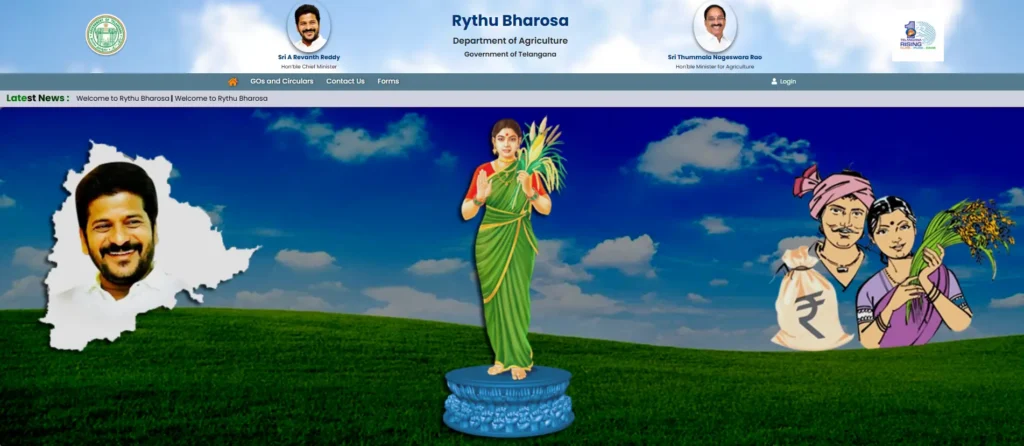
Rythu Bharosa vs. Rythu Bandhu: Key Differences
One of the most frequently searched topics is how the new Rythu Bharosa differs from the older Rythu Bandhu scheme. The government restructured the program to correct structural inequities and target genuine cultivators.
Here are the key differences:
- Increased Payout: The annual financial assistance has been enhanced from ₹10,000 per acre under Rythu Bandhu to ₹12,000 per acre under Rythu Bharosa.
- Tenant Farmer Inclusion: Previously, Rythu Bandhu systematically excluded tenant farmers because payouts were tied strictly to landownership titles. Rythu Bharosa expands coverage to include tenant cultivators, subject to lease validation.
- Support for the Landless: The new scheme includes provisions for landless agricultural families, a demographic that received no direct investment support under the previous administration.
- Strict Land Usage Rules: Rythu Bandhu functioned without an acreage ceiling and often benefited non-cultivating landowners and institutional landholders. Rythu Bharosa is strictly restricted to active cultivable lands.
Eligibility Criteria for Rythu Bharosa 2026
To qualify for the scheme, applicants must be permanent residents of Telangana and fall into the category of small or marginal farmers, tenant farmers, or landless agricultural laborers. Furthermore, the land in question must be actively cultivated.
Rules for Landowning and Tenant Farmers
For landowning farmers, eligibility is verified using updated land records on the newly introduced Bhu Bharati portal, which replaces the older Dharani system. The state conducts comprehensive field surveys—jointly carried out by Agriculture Extension Officers and Revenue Inspectors—to verify active cultivation.
Tenant farmer eligibility under rythu bharosa is one of the most critical updates to the scheme. Tenant farmers can now qualify for financial assistance provided they have validated lease agreements or cultivator certificates. Farmers holding podu lands under the Recognition of Forest Rights Act (RoFR Act) are also officially eligible to receive benefits.
Support for Landless Agricultural Laborers
Recognizing that many rural families do not own or lease land but still rely entirely on agriculture, the government introduced the Indiramma Atmiya Bharosa sub-scheme. Under this initiative, eligible landless agricultural families receive ₹12,000 annually. Beneficiaries are identified using Mahatma Gandhi National Rural Employment Guarantee Scheme (MGNREGS) job card records; specifically, families where a member worked for at least 20 days in the previous year qualify for this support.
Who is Excluded from the Scheme?
To ensure public funds are directed only to active farming communities, the government has established strict exclusion criteria. Non-arable lands, mining tracts, industrial zones, and land parcels converted for real estate ventures are completely excluded from the scheme. Additionally, high-income taxpayers, government employees, and institutional landholders do not qualify for these benefits.
How to Check Rythu Bharosa Payment Status Online
With installments rolling out seasonally, beneficiaries frequently need to verify if their funds have cleared. Performing a rythu bharosa payment status check online is a simple process:
- Visit the Official Portal: Navigate to the official state website at rythubharosa.telangana.gov.in.
- Login: Use the “Login By Using Mobile Number” feature, which requires entering your registered mobile number, submitting a captcha, and verifying via OTP. Alternatively, you can use your Aadhaar number.
- Check Status: Once logged in, navigate to the “Check Amount” or “Beneficiary Status” tab.
- View Details: The dashboard will display your current application status, DBT transaction details, and payment history.
If your payment is delayed, common reasons include Aadhaar-NPCI mapping errors or discrepancies in land records.
Rythu Bharosa Application Process and Forms
The government facilitates both online and offline avenues for farmers to enroll.
To apply online, users must access the rythubharosa telangana gov in application form on the official portal, enter their Aadhaar, land details, and bank account information, and upload the necessary scanned documents.
For those who prefer offline methods, applications can be submitted at the nearest Common Service Centre (CSC), Mandal Agriculture Office, or Gram Panchayat. Agriculture Extension Officers provide on-ground assistance during the application windows.
Required Documents for Registration
Whether applying online or offline, ensure you have the following documents ready for a smooth registration process:
- Aadhaar Card: Used for identity verification and proof of residence.
- Land Records: A Pattadar Passbook or Land Ownership Certificate. Tenant farmers must provide proof of cultivation or a lease agreement.
- Bank Details: A bank passbook showing the account number and IFSC code (must be Aadhaar-linked for DBT).
- Additional Proofs: A valid mobile number, Ration Card, or Domicile Certificate.
Rythu Bharosa 2026 Payment Dates
The government aligns disbursements with the agricultural calendar so that farmers have capital exactly when they need to purchase seeds and fertilizers.
For the Kharif 2026-27 season, the state cabinet has scheduled the disbursement of approximately ₹9,000 crore to begin on June 30, 2026. The Chief Minister will formally launch this massive direct benefit transfer at a farmer convention (Rythu Sammelanam) in Madhira, Khammam district, with funds rolling out to farmers’ accounts over a nine-day window.